The Growing Demand for Long-Stay Hotels in Dubai
Something has shifted in how people book hotels in Dubai. A few years ago, a hotel stay meant three or four nights, maybe a week if it was a proper holiday. These days, front desks across the city are fielding
Something has shifted in how people book hotels in Dubai. A few years ago, a hotel stay meant three or four nights, maybe a week if it was a proper holiday. These days, front desks across the city are fielding a different kind of request: guests asking for a month, sometimes three, occasionally a full year. Long-stay hotels in Dubai have become one of the fastest-growing segments in the emirate's hospitality market, and the reasons go well beyond tourism.
Part of it comes down to the UAE's remote work visa, which lets people live and work here for a full year without needing a local job offer. Part of it is Dubai's notoriously fast-moving rental market, where signing a year-long lease on a flat you've never seen in person feels riskier than it used to. And part of it is that hotels have simply gotten better at this game: kitchens, work desks, weekly housekeeping, loyalty points, the lot. Whatever the mix, extended stay hotels in Dubai aren't a niche booking category anymore. They're becoming a real alternative to renting.
Why Demand for Long-Stay Hotels in Dubai Is Rising
Talk to anyone working in Dubai hospitality right now and the same line comes up: long-stay used to be an afterthought, and now it's a strategy. For years, extended stays were something hotels tolerated rather than pursued, a handful of rooms blocked off for oil-and-gas contractors or airline crew rotating through. That's changed, and the pricing tells the story better than any press release could.
The Marriott Resort Palm Jumeirah, for instance, rolled out monthly long-stay rates starting from around AED 9,850, running through the end of September 2026, bundled with beach access, gym use and dining and spa discounts. A short drive away, voco Bonnington Dubai offers monthly stays from AED 5,999, pitched around comfort and connectivity rather than the usual holiday-brochure language. Two very different hotels, two price points, but the same underlying bet: guests want to commit for weeks, not days.
Rising rents across Dubai have pushed the trend along from the other direction too. When a one-bedroom lease renewal comes with a steep jump, a fully furnished hotel room with no agency fees or security deposit starts looking less like a splurge and more like a sensible bridge option. Add in the 'bleisure' crowd, people stretching a work trip into a few weeks of semi-holiday, and you get a guest base that barely existed at this scale five years ago.
There's also a quieter reason behind the shift. Dubai's hotel sector saw a real dip in short-term, transient demand earlier in 2026, with occupancy dropping sharply amid regional travel disruption and flight cancellations that shook traveller confidence. Long-stay guests don't cancel on a whim the way a three-night leisure booking might. For hotels looking to smooth out those swings, a guest booked in for six weeks is worth more than the headline nightly rate suggests. It's stability, and right now, stability is worth paying for.
Who's Booking Long-Stay and Extended Stay Hotels in Dubai
The guest profile behind this boom is more varied than most people assume. It isn't just backpackers extending a trip or businesspeople stuck on a long assignment. It's a genuine cross-section of who's moving through, or into, Dubai right now.
Remote workers and digital nomads make up a large chunk of it, many here specifically because of the UAE's one-year remote work visa, which was never designed with hotels in mind but has become one of their best customer-acquisition tools. Relocating professionals and families form another big segment: people who've accepted a Dubai job offer and need somewhere to live for the six or eight weeks it takes to house-hunt, sort a tenancy contract, and move in properly. Then there are corporate and project travellers, the banking, construction and energy-sector guests whose assignments run for months and get billed straight back to a company account. A smaller but steady segment comes through medical tourism too: patients and companions staying close to Dubai Healthcare City or private hospitals for treatment and recovery, where a hotel room simply works better than a hospital ward or a short-term rental.
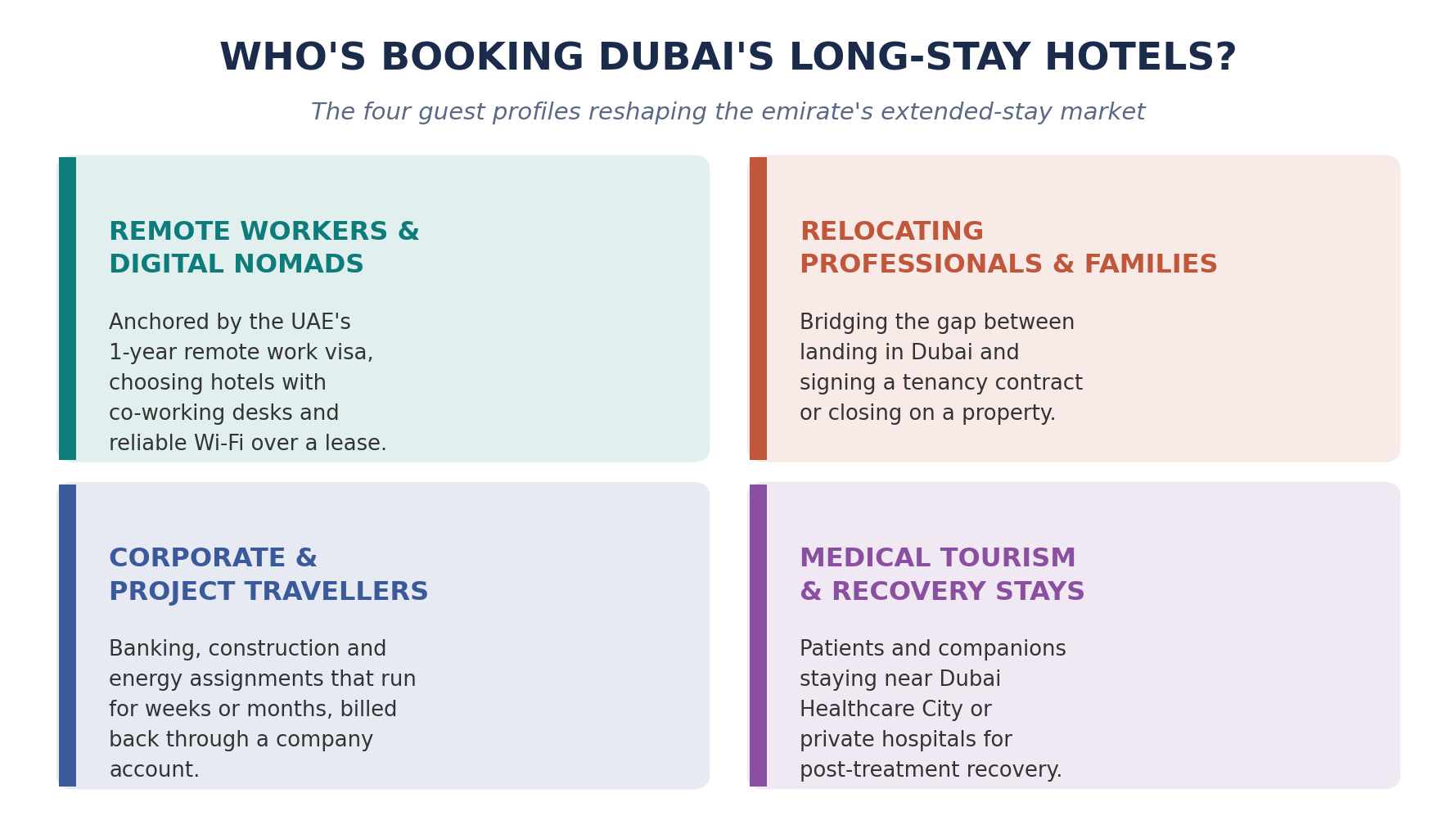
Fig. 1 — The four guest profiles driving demand for long-stay hotels in Dubai.
What Guests Expect From Long-Stay Hotels in Dubai
Ask a long-stay guest what they care about and you'll rarely hear 'thread count.' It's far more practical than that. A proper kitchen sits near the top of most wish lists, not a kettle and a mini-fridge, but a stove and enough counter space to actually cook, followed closely by in-unit laundry, because doing a wash every few days at a shared laundrette gets old fast over a two-month stay.
Housekeeping expectations shift too. Long-stay guests generally don't want someone in their room every single day; a weekly or twice-weekly clean, with fresh towels on request, tends to suit better and keeps costs down for the hotel as well. A proper desk and dependable Wi-Fi matter more than a dramatic lobby, particularly for the remote-work crowd who are effectively running a home office out of their room. Increasingly, guests are learning to negotiate too. Several Dubai properties will quote a better rate directly for stays beyond fourteen nights than what shows up on the booking engine, and it's worth asking whether utilities and Wi-Fi are included in that quoted weekly or monthly figure before assuming they are. Loyalty programme perks, from free upgrades to points that keep accruing on a month-long stay, have also become a real factor in which brand guests choose, not just where, but who.
Monthly Hotel Rates for Long-Stay Hotels in Dubai
Pricing across Dubai's long-stay hotel market varies widely, and the two confirmed examples already mentioned give a fair sense of the range. Marriott Resort Palm Jumeirah's long-stay rate sits at roughly AED 9,850 a month with beach access and dining perks bundled in, while voco Bonnington Dubai starts from AED 5,999 a month for a more straightforward, no-frills stay. That's roughly a two-to-one spread between a beachfront five-star and a well-located but simpler property.
Beyond these two, a wider set of hotels across Dubai, from budget-friendly options near business parks to aparthotels and serviced-apartment-style properties in Media City, Bur Dubai and Al Jaddaf, also advertise monthly rates for long stay in Dubai, generally running from the low thousands of dirhams up to the mid-teens for premium, kitchen-equipped apartments. Rates shift by season, neighbourhood and how many amenities are bundled in, so it's worth confirming directly with each hotel rather than relying on aggregator listings, which don't always stay current.
Best Dubai Neighbourhoods for Long-Stay Hotels
Long-stay demand isn't spread evenly across Dubai. It clusters around a handful of areas for fairly obvious reasons. Hotels in Dubai Marina and Downtown Dubai remain magnets for guests who want walkability, restaurants and a sense of being in the middle of things, and they command correspondingly higher rates. Business Bay has become a stronghold for the corporate and relocating-professional crowd, sitting right alongside DIFC and other major office clusters, which makes daily commuting painless.
Dubai Media City and nearby Al Barsha attract a heavy concentration of media, marketing and tech professionals, many on the remote work visa, drawn by co-working-friendly hotels in a walkable neighbourhood. Palm Jumeirah sits at the other end of the spectrum: long stay in Dubai is less about convenience and more about lifestyle, appealing to guests who can justify a beachfront month as both business trip and holiday. Out toward Dubai Investments Park, meanwhile, budget-focused properties serve a quieter, logistics-driven guest base that rarely makes glossy round-ups but keeps occupancy steady year-round.
Long-Stay Hotels vs Serviced Apartments in Dubai
The rise of long-stay hotels hasn't happened in a vacuum. It's competing directly with Dubai's large serviced apartment market for the same guests. Serviced apartments can undercut hotels on price for a bare unit, but they usually ask for a larger upfront payment (a security deposit plus several months in advance isn't unusual), offer far less flexibility if plans change partway through, and vary considerably in management quality from one building to the next.
Hotels, by contrast, are winning trust on consistency: a recognised brand, a transparent rate, housekeeping already built in, and the ability to extend, shorten or switch room types without renegotiating an entire contract. For a guest who isn't sure if they're staying six weeks or six months, that flexibility is worth more than a marginally cheaper nightly rate. It's a big part of why hotel groups have leaned so heavily into this segment.
The Future of Dubai's Long-Stay Hotel Market
The direction of travel looks fairly clear from here. Even as short-term tourism demand wobbled through parts of 2026, longer-stay visitor segments (business travellers extending trips, relocating professionals, project-based assignments) kept forward reservations healthier than they otherwise would have been, giving hotels reason to treat long-stay as core strategy rather than a side offering. Property managers in adjacent sectors, including branded residences and serviced apartments near business districts and coastal areas, have reported the same pattern of support from long-stay planning.
Expect more hotel brands to formalise dedicated long-stay programmes over the next year or two, rather than just discounting empty rooms on an ad hoc basis. For guests, that should mean clearer pricing, more properties genuinely built for weeks-long comfort, and a lot more competition working in their favour.
Why Long-Stay Hotels in Dubai Are Here to Stay
Dubai's long-stay hotel boom isn't a passing trend tied to one visa scheme or one rough patch in the rental market. It's a real restructuring of how the city's hospitality sector thinks about demand. Remote workers, relocating families, corporate travellers and medical tourism guests are all pulling in the same direction, and hotels from no-frills business-park properties to beachfront addresses on the Palm are responding with real, dedicated programmes rather than one-off discounts. For anyone weighing up a month or more in Dubai, that's good news: more choice, sharper pricing, and hotels that finally treat a long stay as exactly what it is: not an exception, but an entirely normal way to book.